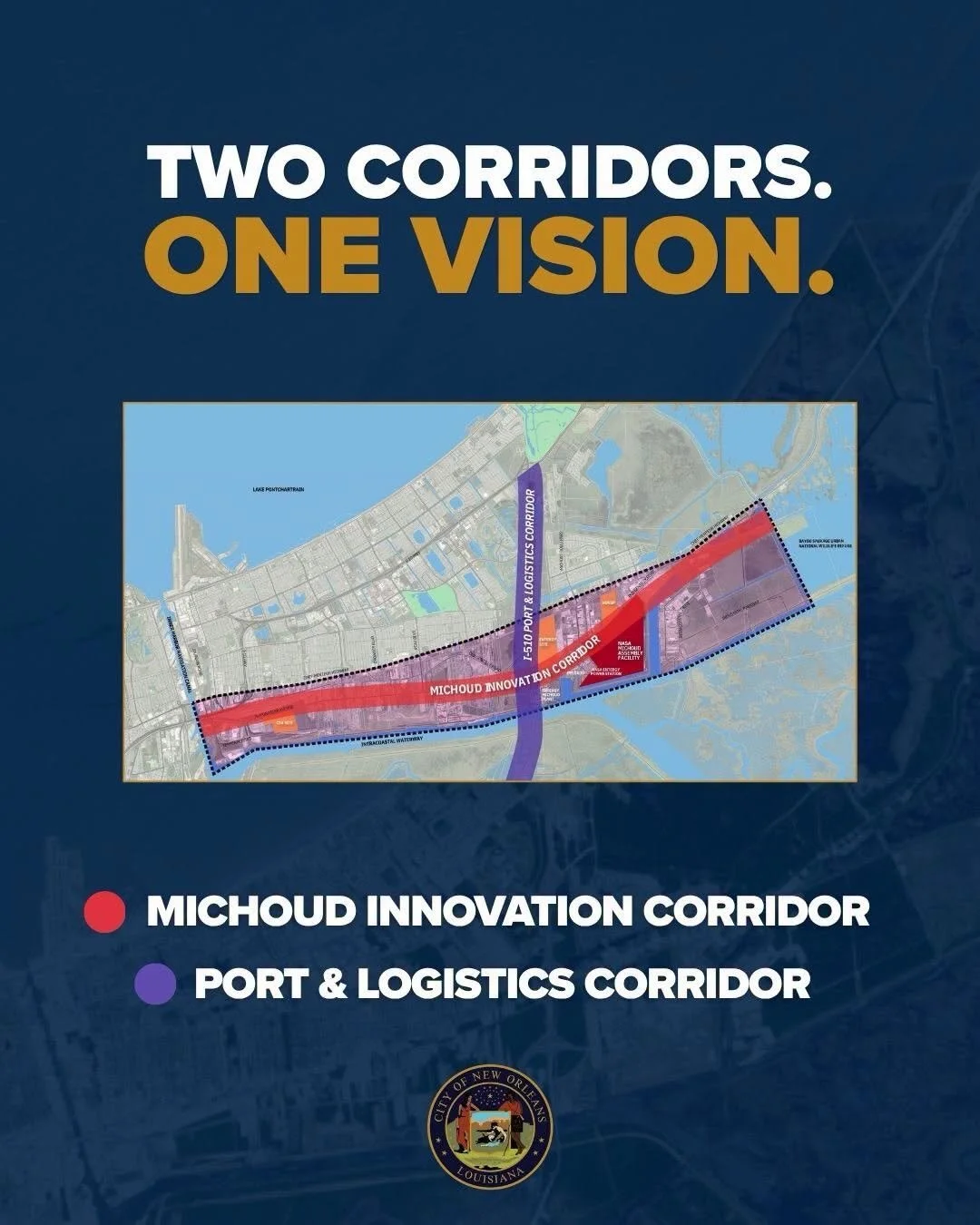
The Full New Orleans East Development Plan Leaked ?: [Developing Story ]
The “business community” is a tight one, that typically works in consort, recycling versions of the same ideas for profit. Typically from my own experience, professional and personal relationships don’t know boundaries, but they do share the common thread of privacy. I have typically considered the entire Moreno Administration feckless at this point, as much of her policy comes from recycled though experiments from think tanks like GNO inc. and the Business Council of New Orleans.
So when Helena Moreno announced “her” plan for economic development for the East I knew just from my understanding of the logic of how neoliberalism in the City of New Orleans operate, there was much more to the story than she let on, and the breadcrumbs always lead to the loosest ends.
In the beginning of the year when Moreno was elected, I noticed immediately despite the Business Council of New Orleans pledge she and other mayoral candidates signed to search for top tier nation wide talent to staff her office, I knew something was off when she started hiring unqualified candidates for the job.
A few noteworthy individuals, 26 year old Leo John Arnett fresh from GNO Inc. as the Director of Research and Policy for the City of New Orleans. Like most 20 something year olds, it isn’t exactly clear if he has lost the trianing wheels.
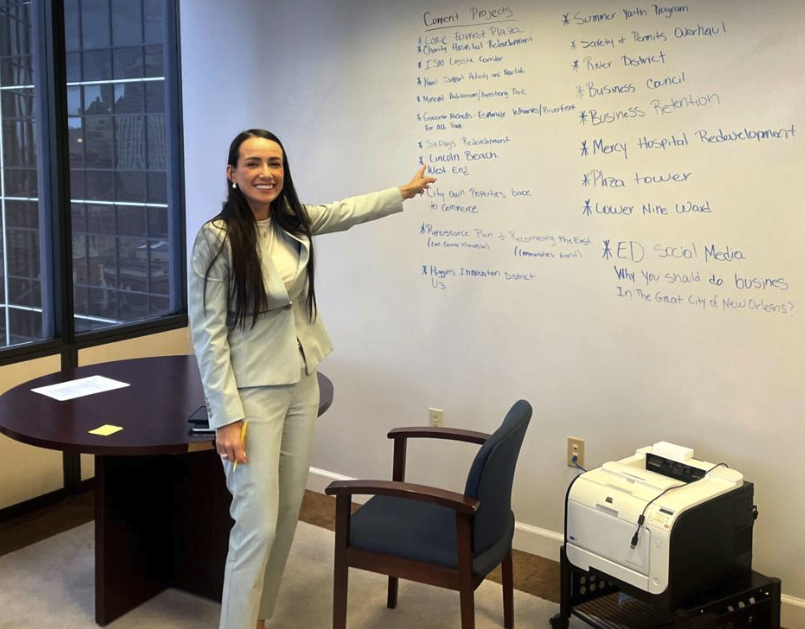
Or maybe most pertinent to this post Jenny Mains, a medical doctor who used to work for her husbands logistics firm CRC Global. I am sure somewhere in the recesses of corporate America economic development and medicine have some overlap, but it is a stretch to be honest.
I find it incredibly odd how similar Moreno’s , Entergy’s, and CRC Global’s plans for New Orleans east are.
Furthermore, in the aforementioned order they have been released by decreasing recentness, while they increase in specificity. Thus leading me to believe that CRC Global conjured this plan first, it was them visualized by Entergy and complied as a report with the collaboration of GNO Inc. or another firm that uses Ligthtcast.io and then packaged for Moreno to breadcrumb the general population. Because the reality is, if the general public were to see what was in this plan, they would never go for it.
CRC GLOBALS PLAN
Its worth noting that completely running over and disregarding entire communities is entirely on the table with a deep analysis of what has been occurring recently in New Orleans in regards to primary stakeholders for this massive expansion of trade and logistics. The Port of New Orleans, the Army Corp of Engineers and the associated multinational corporations that have sought to assist in ecocide and industrializing the Lower 9th Ward and New Orleans East into environmental wastelands for their own profit at the expense of the rest of New Orleans.
The current reindustrialization plan for New Orleans East, its connection with the Louisiana International Terminal in St. Bernard, in part owned by the biggest shipping giant in the world, the Mediterranean Shipping Company, the seeking of the Port of New Orleans to expand the Industrial Canal for larger container ships, and its ruthless push for the Alabo Street Wharf Grain Train despite massive community pushback.
ENTERGY’S PITCH THAT WIPES OUT NEARLY 1000 ACRES OF TREES IN NEW ORLEANS EAST
From the perspective of an urban ecologist, the proposal to transform large portions of New Orleans East into an expanded logistics and warehouse district is about far more than economic development. It is about changing the ecological function of one of the largest remaining natural landscapes within the city. The discussion is often framed as developing "vacant" land, but ecologically, much of this landscape is anything but vacant. It is part of a living system that provides flood storage, wildlife habitat, carbon sequestration, temperature regulation, and water filtration—services that become especially valuable in a city whose future is increasingly shaped by climate change.
At the outset, it is important to distinguish between what is known and what remains uncertain. The City's Investment and Job Corridors initiative and related planning documents clearly articulate a vision for expanding industrial, logistics, and manufacturing activity in New Orleans East. They discuss identifying development-ready sites and preparing land to attract private investment. What has not yet been publicly established is exactly which parcels will be developed, how many acres will ultimately be cleared, and whether those sites consist primarily of previously disturbed land, intact forest, or jurisdictional wetlands. Those distinctions matter enormously because the ecological consequences differ depending on what is actually replaced.
If the buildout envisioned by these proposals were to involve clearing hundreds of acres of existing forest, the consequences would extend well beyond the loss of trees. The forests of New Orleans East are part of a much larger ecological network that includes bottomland hardwood forests, cypress-tupelo swamps, marshes, and habitat connected to Bayou Sauvage National Urban Wildlife Refuge. These ecosystems support migratory birds traveling the Mississippi Flyway, reptiles, amphibians, pollinating insects, and mammals that depend on large, connected landscapes. They also perform ecological work every day that rarely appears on municipal balance sheets. Forests slow rainfall before it reaches drainage canals, store stormwater during intense rain events, stabilize soils, filter pollutants, and moderate local temperatures through shade and evapotranspiration. These are not aesthetic benefits alone; they are functional infrastructure that has evolved over centuries.
Perhaps the greatest ecological concern is not simply the removal of trees but the transformation of how water moves through the landscape. New Orleans exists only through an intricate balance between natural hydrology and engineered drainage. Forested landscapes intercept rainfall, delay runoff, and provide temporary storage during storms. Replacing those landscapes with warehouses, expansive parking lots, and truck courts introduces large areas of impervious surface that shed water almost immediately. Modern stormwater detention systems can reduce some impacts, but they rarely replicate the complexity or resilience of mature forests and wetlands. In a city that already relies heavily on mechanical pumping to remain dry, increasing runoff can place additional pressure on drainage systems and contribute to localized flooding during increasingly intense rainfall events.
Ecologists also worry about fragmentation as much as they worry about acreage. A forest does not lose its ecological value only when it disappears entirely. Roads, distribution centers, and industrial corridors can divide one continuous habitat into isolated fragments, making it more difficult for wildlife to move, reproduce, and maintain healthy populations. Edge habitats become hotter, windier, and more susceptible to invasive species, while interior forest conditions gradually disappear. Even if hundreds of acres remain, they may no longer function as a single ecosystem.
The consequences would also be felt through changes in climate at the neighborhood scale. Mature forests store substantial amounts of carbon both above and below ground. Warehouses, by contrast, are among the most heat-intensive forms of urban development, combining enormous reflective roofs, asphalt pavement, and relatively little tree canopy. The result is a stronger urban heat island, where surrounding neighborhoods experience higher summer temperatures, increased energy demand, and greater exposure to heat stress. In a city already experiencing longer and more intense heat waves, the loss of urban forest cover would reduce one of the few natural mechanisms available to moderate those extremes.
Air quality represents another dimension of ecological change. A logistics hub brings more than buildings; it brings diesel trucks, freight equipment, locomotives, and increased industrial traffic. These activities increase emissions of particulate matter, nitrogen oxides, and carbon. While such pollutants are typically discussed as public health concerns, they are also ecological stressors, affecting vegetation, soil chemistry, and nearby aquatic systems. The burden of those emissions is rarely distributed evenly across a city.
This is where the ecological analysis becomes inseparable from the history of New Orleans East itself. The area has long been home to predominantly Black communities, alongside one of the largest Vietnamese American communities on the Gulf Coast. Following Hurricane Katrina, many neighborhoods experienced decades of uneven reinvestment despite remarkable community-led recovery efforts. Residents have repeatedly confronted cycles of disinvestment followed by renewed interest whenever the area becomes strategically valuable for regional infrastructure or industry.
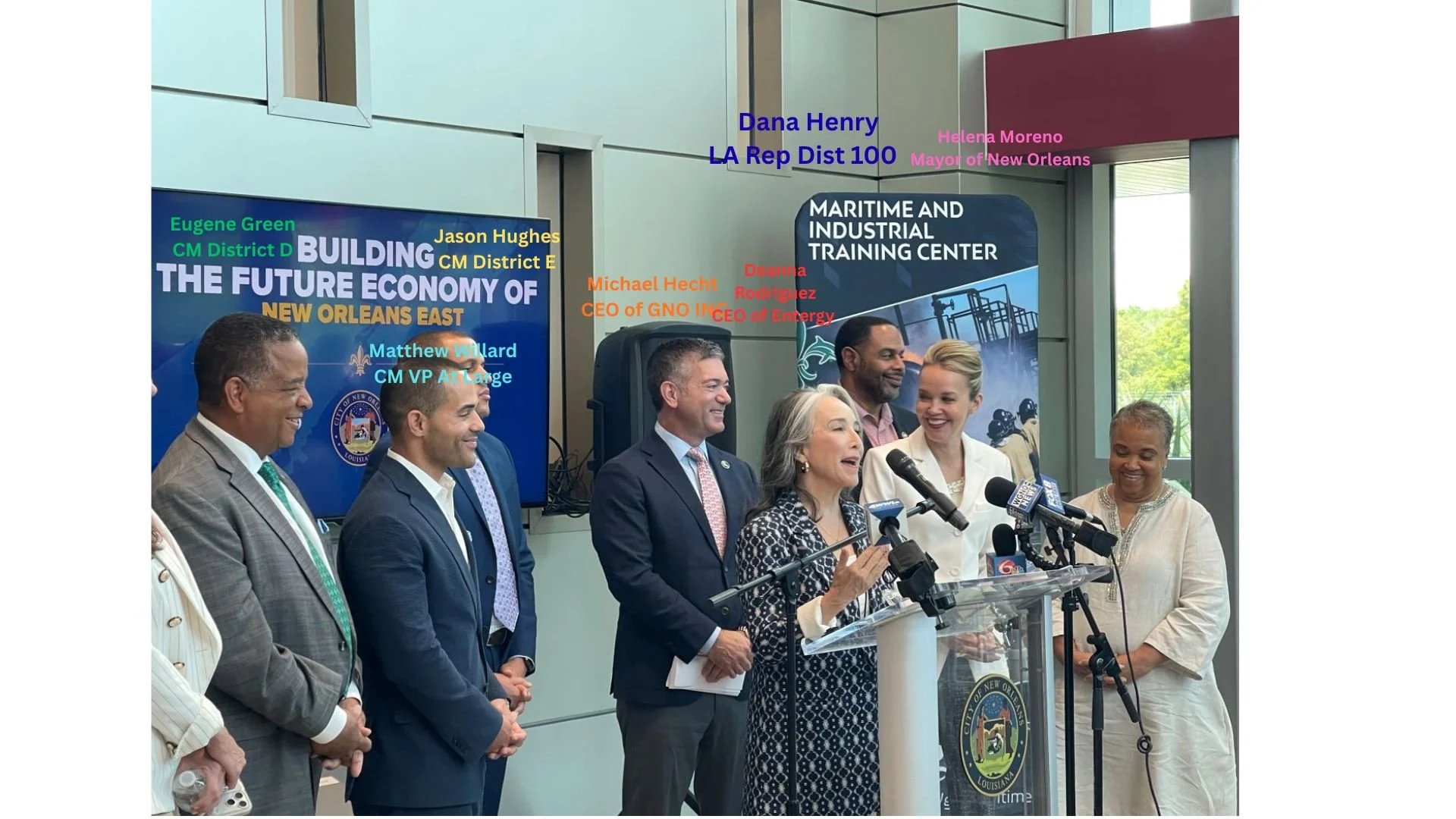
The Usual Suspects